How the Digestive System Works, Step by Step
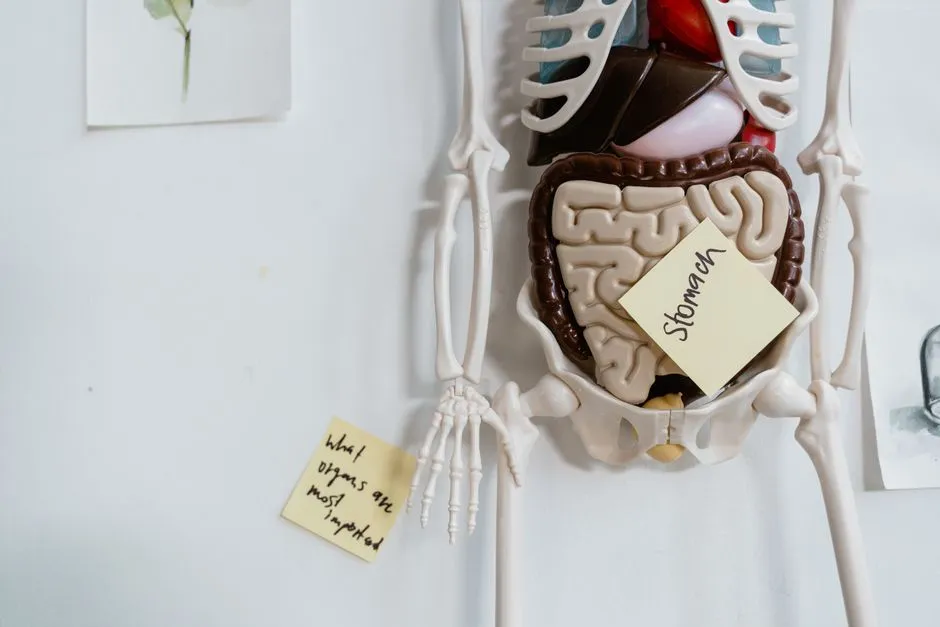
How does the digestive system work?
The digestive system moves food and liquid through the gastrointestinal tract, breaks them into smaller parts, absorbs nutrients and water, and passes the remaining waste. The gastrointestinal tract runs from the mouth to the anus. The liver, pancreas, and gallbladder also contribute to digestion. This general map explains normal anatomy, not what a personal symptom means.
Which organs make up the digestive system?
The National Institute of Diabetes and Digestive and Kidney Diseases describes the digestive system as the gastrointestinal tract, also called the GI or digestive tract, plus the liver, pancreas, and gallbladder.
The GI tract is a connected series of hollow organs:
- mouth;
- esophagus;
- stomach;
- small intestine;
- large intestine;
- anus.
The liver, pancreas, and gallbladder are solid organs. Each part has a different role, but digestion depends on their combined work rather than one organ acting alone.
How does food move through the GI tract?
Food begins moving through the tract when it is eaten and swallowed. NIDDK calls the muscle movement that pushes and mixes food and liquid peristalsis. Muscles behind the contents contract while muscles ahead relax, moving material forward.
Peristalsis is not a conscious pushing action. Nerves and hormones help control digestive activity, while blood carries absorbed nutrients to where the body needs them. Bacteria in the GI tract also participate in digestion.
What happens in the mouth, esophagus, and stomach?
Chewing breaks food into smaller pieces and saliva begins changing some starches. Swallowing moves food into the throat. A flap of tissue called the epiglottis closes over the windpipe during swallowing, and the food passes into the esophagus.
The esophagus moves food toward the stomach. In the stomach, muscles mix food and liquid with digestive juices. The stomach then releases its contents gradually into the small intestine.
This sequence is a simplified anatomy overview. Difficulty swallowing, persistent vomiting, pain, or another symptom needs assessment by a qualified clinician rather than a conclusion drawn from this description.
What do the small intestine and solid organs do?
The small intestine mixes its contents with digestive juices from the intestine, pancreas, and liver. Those processes break food into parts small enough for the body to absorb. The walls of the small intestine absorb water and digested nutrients, which move into the bloodstream.
NIDDK explains that the pancreas supplies digestive juice used for carbohydrates, fats, and proteins. The liver makes bile, which helps digest fats, and the gallbladder stores bile between meals. This is a description of normal functions, not a guide to testing any of these organs.
What happens in the large intestine?
Material not absorbed in the small intestine continues into the large intestine. The large intestine absorbs water. Bacteria there can break down some remaining material, and the waste products of digestion become stool.
The rectum is the final part of the large intestine. Stool remains there until a bowel movement passes it through the anus. Changes in bowel habits can have many causes. A webpage cannot determine which cause applies to one person.
When does anatomy stop being enough?
An organ map can explain the route food takes, but it cannot diagnose pain, bleeding, difficulty swallowing, vomiting, weight change, or altered bowel habits. Record what is happening and contact a qualified clinician for assessment. The appointment-preparation guide explains what to bring and which observations to record. The Clinical Conversations section keeps those questions separate from general anatomy.
Use local emergency services for a life-threatening situation. Do not use this page to start, stop, or change medicine, food, supplements, tests, or treatment.
Sources
- National Institute of Diabetes and Digestive and Kidney Diseases, Your Digestive System & How It Works — accessed September 3, 2026; supports the organ list, peristalsis, digestive-juice, absorption, water, bacteria, and waste-process descriptions used here.